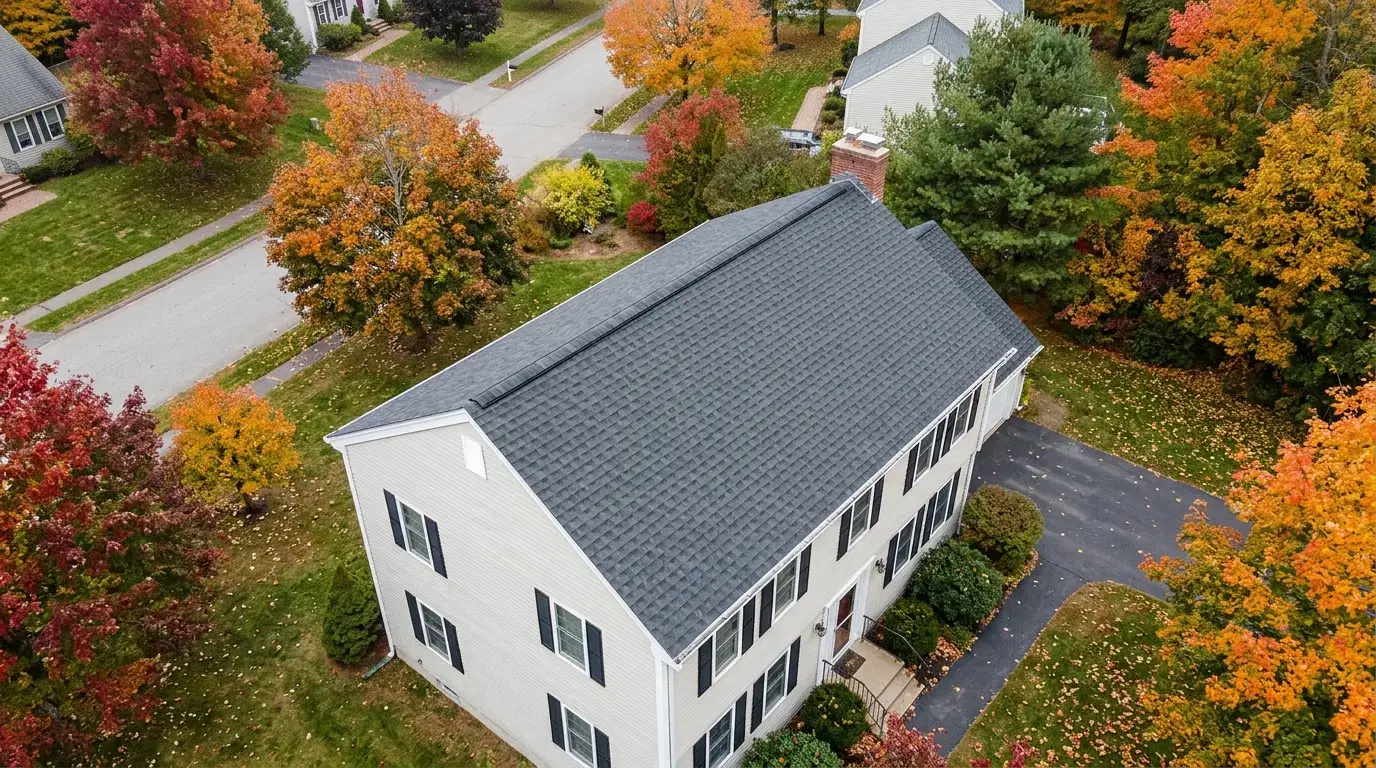
Planning a new roof? An early question is whether you need a permit to replace a roof in Massachusetts. In most cases, the answer is yes. The state building code covers reroofing, and local building departments issue the permits.
The rules also go beyond the permit itself. Massachusetts requires specific licensing for the person supervising roof work on most homes. The code limits how many layers of roofing can stay on the house. It also sets requirements for ice protection along the eaves, which matters in a state with real winters.
Knowing these rules helps you ask the right questions when you hire a roofer. It also protects you when you sell the house, since unpermitted work can raise questions later. Here is what homeowners should know before the old shingles come off. It also helps you read a roofing estimate with a clearer eye. You'll know which line items the code requires and which ones are upgrades.
A Building Permit Comes First
Roof replacement on a Massachusetts home generally needs a building permit from the local building department. The application describes the work, the materials and the contractor doing it. Many towns also ask for the contractor's license and registration numbers on the form. Once the permit is issued, the card is posted on site where the inspector can see it.
Some towns inspect during the job, while others focus on a final inspection. Homes in a local historic district may also need commission approval before the permit is issued. That's most likely when the material or color changes. A reputable roofer handles the permit for you.
Who Can Pull the Permit: CSL and HIC
Massachusetts separates two credentials that homeowners often confuse.
- Construction Supervisor License (CSL)Issued to an individual who supervises the work
- Home Improvement Contractor (HIC)Required for most work on existing one-to-four family owner-occupied homes
Since 2008, roofing has required a specialty CSL, and broader CSL categories also cover it. The two are different credentials, and one doesn't replace the other. Before you sign, ask for both numbers.
The state offers online tools to check HIC registration and complaint history. Homeowners can also pull their own permit for their primary residence. In that case, they take on the responsibility for code compliance that a licensed contractor would normally carry.
The Two-Layer Limit and When a Tear-Off Is Required
Not every roof can be covered over with new shingles. The state code doesn't allow a recover when the existing roof has two or more layers of any covering. A recover is also ruled out when the old roof is water soaked or too worn. Wood shake, slate and certain tile roofs can't be covered over either.
In those cases, everything comes off down to the deck. A full tear-off has another benefit. It lets the roofer see the sheathing, replace soft spots and install new underlayment correctly. On many Massachusetts homes with two old layers, a tear-off isn't optional.
It's the only way the job passes inspection. Learn more about our roof replacement in Massachusetts.
Ice Barrier and What Inspectors Check
Massachusetts winters bring ice dams, and the code addresses them directly. An ice barrier is required along the lower edges of the roof. It has to run from the eave to a point 24 inches or more inside the exterior wall.
The barrier can be a self-adhering membrane or two layers of underlayment cemented together. Inspectors may also look at drip edge, flashing at walls and chimneys, and proper fastening of the shingles. Ventilation is another common topic during a reroof.