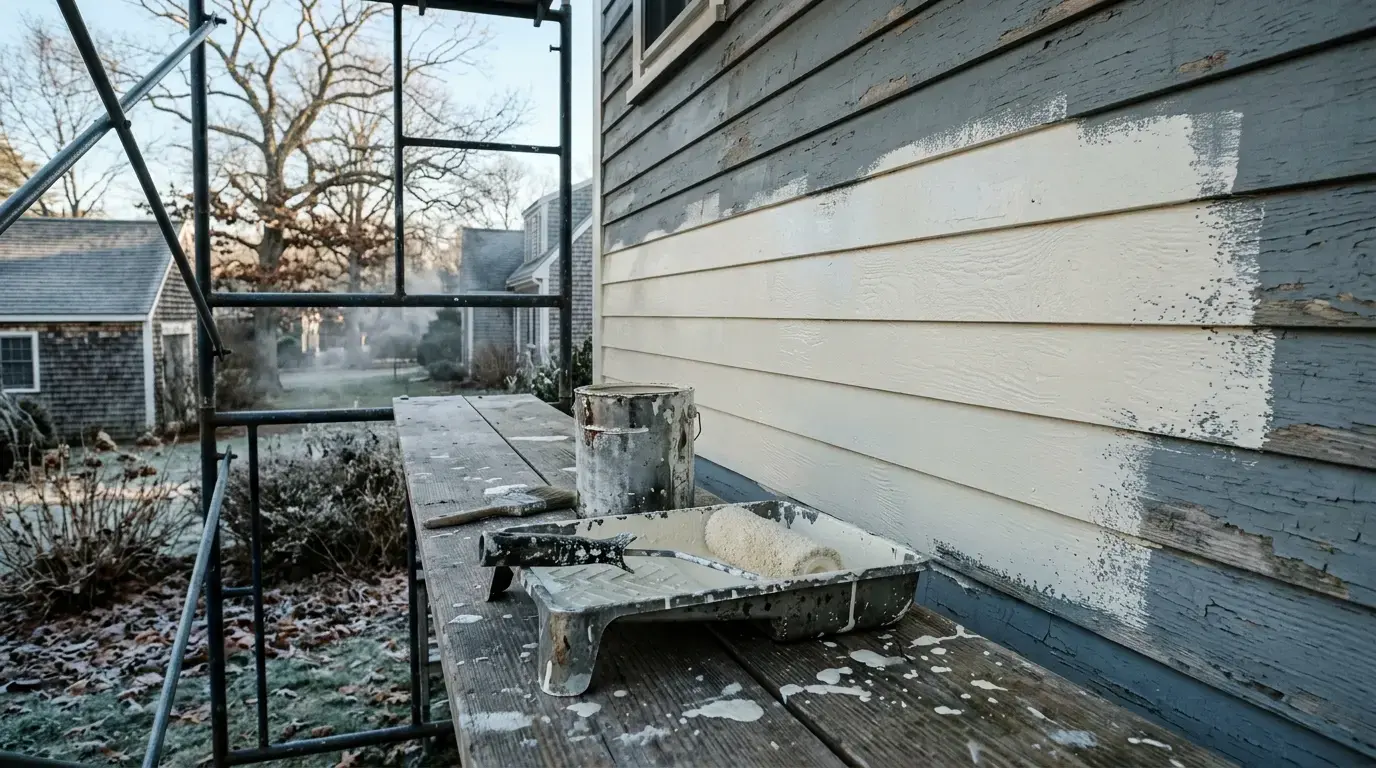
Fall is a popular time to paint. It brings a common question: how cold is too cold to paint a house exterior in Massachusetts? There isn't one number that works for every job. The right temperature depends on the paint, the surface and what the weather does overnight.
Paint needs time to dry and then cure into a tough film. Cold air, a cold wall and heavy dew all slow that process down. When paint can't cure properly, it may stay soft, look blotchy or peel early. In Massachusetts, the painting season usually runs from late spring into fall. The edges of that season are where most problems happen.
This guide explains what to check before painting in cool weather. It also shows why tonight's low matters as much as today's high. Knowing these limits helps you book at the right time and avoid paying to repaint sooner than expected.
Read the Label Before the Forecast
Every exterior paint lists a minimum application temperature on the can or the product data sheet. That minimum usually applies to both the air and the surface being painted. Some newer formulas are rated for colder days than older ones.
Primers, stains and caulk each have their own limits, which may be stricter than the paint's. A painter who knows the products checks every material, not just the topcoat.
Painting below the stated minimum can void the manufacturer's warranty. More importantly, it can shorten the life of the paint job by years.
Surface Temperature, Dew and Overnight Lows
The temperature of the wall matters more than the number on your phone. North-facing walls and shaded sides of a Massachusetts house stay cold long after the sun comes up. Siding may also be damp from dew in the morning and again in the late afternoon. Paint applied over moisture or onto a cold surface bonds poorly.
Overnight lows are just as important. Fresh paint keeps curing for hours after it feels dry to the touch. If the temperature drops sharply or dew forms that evening, the finish can stay tacky or develop streaks.
How Fall Painting Changes the Daily Schedule
Late-season painting in Massachusetts runs on a shorter day. Crews start later, after the dew burns off and walls warm up. They stop earlier, so fresh paint has time to set before temperatures drop. Painters often follow the sun around the house.
- East wallsPainted in late morning
- West wallsWait until afternoon
- Shaded or north-facing wallsMay be saved for the warmest day of the week
Rainy stretches push the schedule back further. This is why a fall paint job can take longer than the same job in June. Planning ahead and booking early in the season gives the work more good days to choose from.
When It Makes Sense to Wait Until Spring
Sometimes the best decision is to pause. If the forecast shows a long run of cold nights, the risk of a poor cure goes up. Wood that has soaked up fall rain needs time to dry before primer goes on. Large repairs, such as replacing rotted trim, can be done now.
A coat of primer protects them until painting. Interior painting is another option during the colder months. Hendo Construction looks at the forecast, the wall conditions and the products on each job. If the weather won't allow paint to cure properly, we tell you and suggest a better window.
A paint job that waits a few weeks will usually outlast one rushed into the cold. Learn more about our exterior painting in Massachusetts.