

Roofing
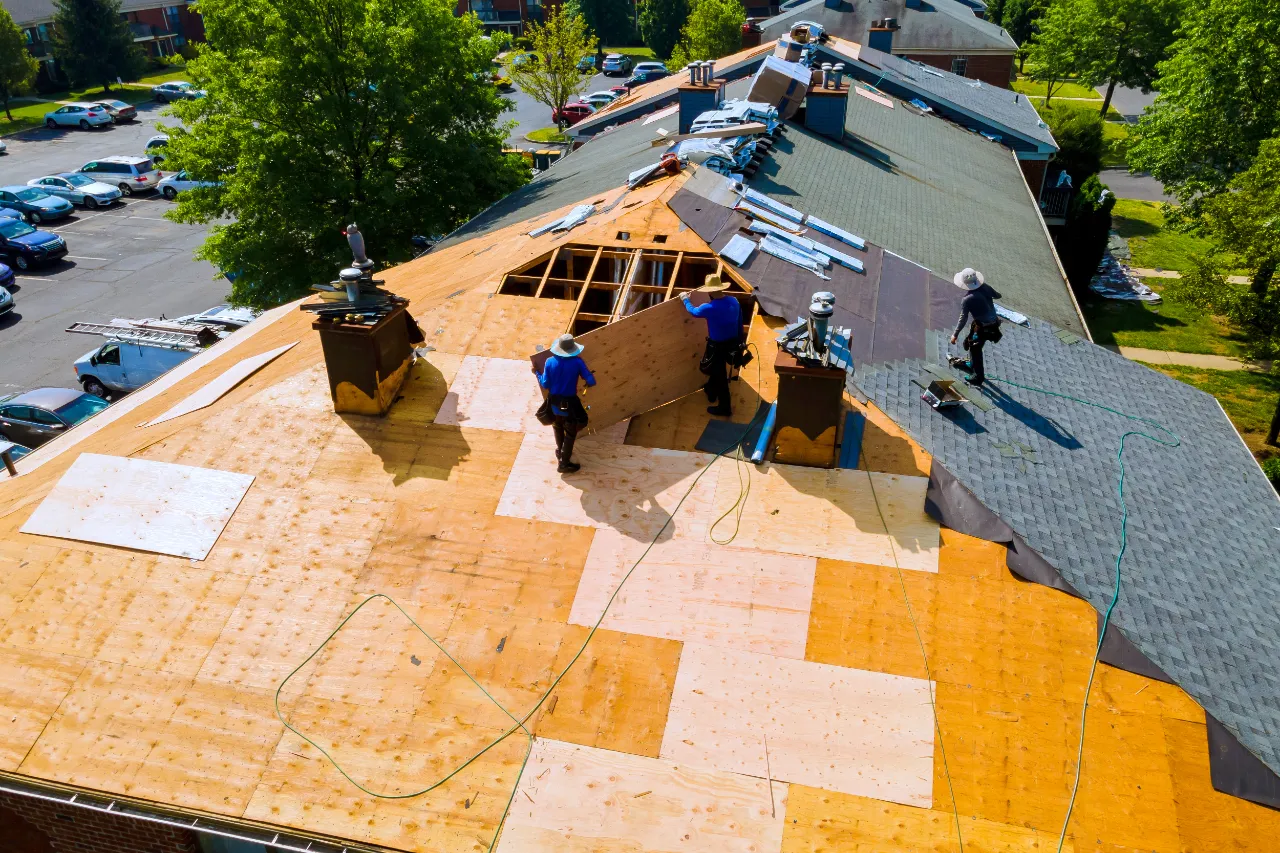
Leak repairs, storm repairs and roof replacements on shingle, asphalt, rubber and PVC roofs. Flashing is redone where the roof meets a wall.
View Roofing ServicesHendo Construction is a siding contractor for vinyl, composite and vinyl shingle siding on houses and commercial buildings. Every wall gets installed, repaired or replaced with tight corners, windows and rooflines, where Massachusetts weather pushes in first.
Siding in Massachusetts has to handle wind-driven rain from nor'easters and heavy snow against the lower courses. It also goes through long stretches of freeze and thaw every winter. Most of that water does not come through the panels themselves. It works in at the edges: corner posts, window and door channels, the roofline and the starter course. Hendo Construction plans those edges before the first panel goes up. The result is a wall that sheds water at every transition, not only on the flat areas.
The siding work at Hendo Construction covers three materials: vinyl, composite and vinyl shingle. Every estimate names the one going on the wall and explains why it fits. Each material moves differently with temperature and needs its own fastening pattern, spacing and edge details. Vinyl grows on hot afternoons and shrinks on January nights, so it hangs loose on its nails. Composite boards are heavier and more rigid, so they need firm nailing into framing. Vinyl shingle panels interlock in staggered rows that must line up around the building.
Homeowners and commercial property owners both call for siding work, and the jobs look different. A single-family house often needs one or two elevations repaired, or a full re-side with new channels at every window. A commercial building may have long, tall walls, more foot traffic below and a schedule shaped by tenants or customers. Hendo Construction plans ladder and staging access, deliveries and daily work areas around how the property is used. On both kinds of buildings, the crew checks the wall behind the siding before any new panel is fastened.
New siding installation starts with the wall itself. On additions, new construction and stripped walls, the crew checks the sheathing for soft spots, loose fasteners and gaps. Housewrap or another weather-resistant barrier goes on next. It is lapped from the bottom up, so water always runs over the layer below. Window and door openings get flashing tape at the sills and sides before any channel is set. Only then does the starter strip go on, level and straight. Every course above it follows that first line, so it has to be right.
The edges come next. Outside and inside corner posts are set plumb, and J-channel frames every window, door and roof transition. These pieces are where most leaks begin on poorly installed walls. Each one is cut clean, overlapped in the right direction and sealed where the manufacturer calls for it. At the roofline, the top course finishes under a channel that keeps rain out of the last row. At the bottom, the starter course sits high enough above grade to stay clear of splash and plowed snow.
Panels go on course by course, locked into the row below and fastened through the center of the nailing slots. Vinyl panels are left loose enough to slide, with room at each end for expansion. Composite boards are nailed tight into framing at the spacing the maker lists. Vents, light fixtures and hose bibs get mounting blocks, so the siding is never cut and caulked around them. Before the crew leaves, every wall is checked from the ground. Courses should run straight, reveals even and corners clean from top to bottom.
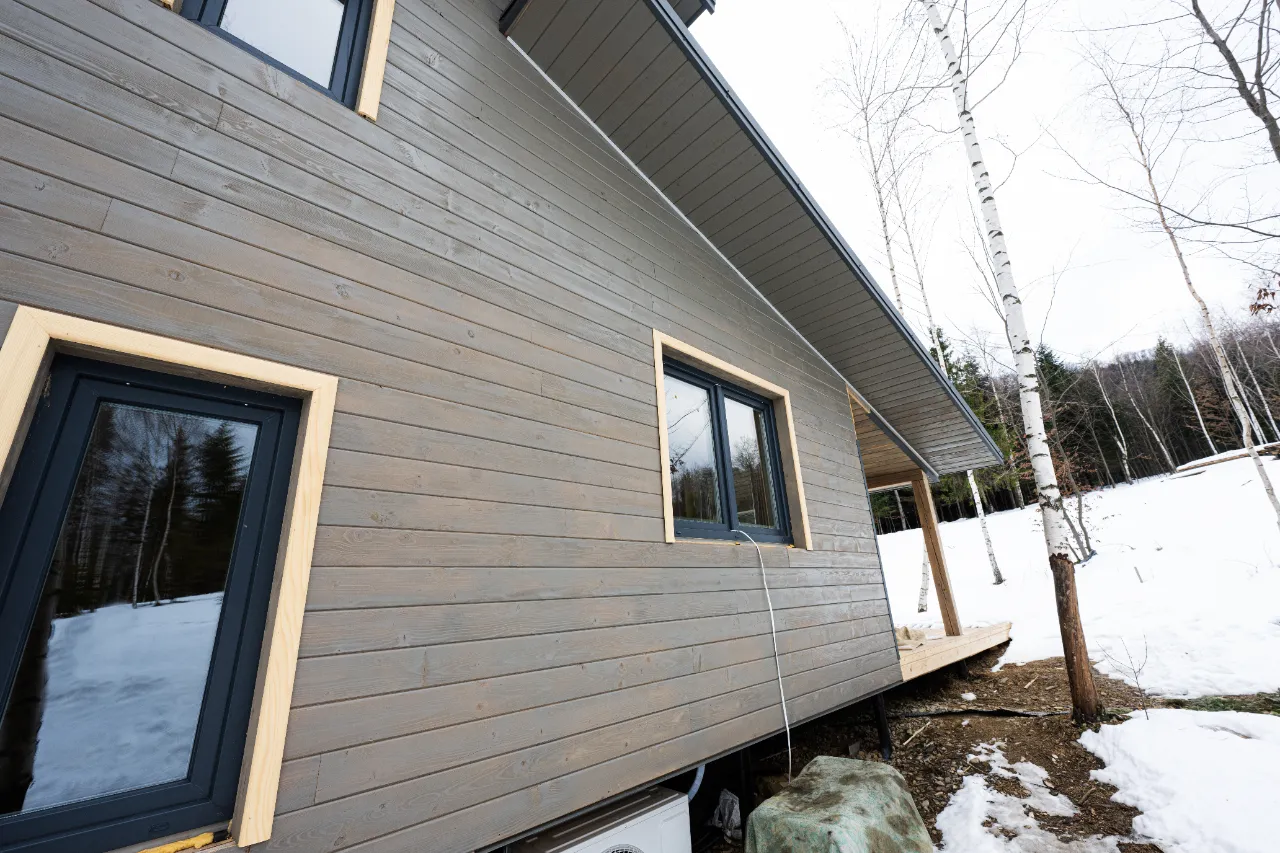
Siding repair covers the problems that do not need a full new wall. Common calls include panels blown loose in a nor'easter and pieces cracked by a stray ball. Corners pulled away from the house are another. Vinyl turns stiff in freezing weather, so a hard January hit can split a panel that would flex in July. Smaller jobs matter too. Gaps at the J-channel and failed caulk around a window let water in. So do dents from snow sliding off the roof.
On vinyl walls, a damaged panel is unlocked from the course above with a zip tool. It comes out and a new one goes in without pulling the whole wall apart. The crew looks behind the opening while it is exposed. Dark stains, soft sheathing or torn housewrap mean water has been getting in. That damage gets fixed before the new panel goes back. Composite repairs follow the same idea. The damaged board comes out, the barrier is patched and the new board is fastened and finished to match.
Color match is the hardest part of any siding repair. Panels that have faced the sun for years fade over time. A new panel from the same product line can look darker beside them. When an exact match is not possible, the estimate lays out the options. One is replacing a full section out to a natural break, such as a corner or a window. That keeps the difference from showing in the middle of a wall. Repairs are worth doing early, because one loose panel can let snowmelt soak the sheathing all winter.
Siding replacement makes sense when repairs keep coming back or panels are brittle and warped on a whole wall. It is also the answer when old siding hides damaged sheathing. In most cases the old material comes off down to the sheathing. That lets the crew see rot around windows, gaps at the sill plate and soft spots. A new layer of siding would only cover those problems up. Installing over old siding is considered only when the wall below is flat, dry and sound. The estimate states that in writing.
A replacement is also the right time to fix details the old siding got wrong. Some windows were set without sill flashing. Some walls are missing kick-out flashing where a roof edge meets the siding. Some corners trap water instead of shedding it. All of these can be corrected while the wall is open. Damaged sheathing is cut out and replaced with new panels of matching thickness. Gaps around pipes, wires and vents are sealed. The new barrier then goes over a wall that is flat, dry and ready to hold fasteners tight.
Choosing the new material is part of the replacement estimate. Vinyl siding is light, needs no paint and comes in a wide range of colors. Composite siding gives a heavier board with a deeper shadow line and a firmer feel against the wall. Vinyl shingle siding brings the look of cedar shakes to a full house, a gable or a dormer. The crew walks the property with the owner first. They look at the style of the building and the exposure of each wall. Then the options are priced side by side.
Vinyl siding is a popular choice on Massachusetts houses. It needs no painting and keeps its color for years with simple washing. Good vinyl work depends on letting the panels move. Each nail goes in the center of the slot and stops short of pinching the panel. That way the siding can slide as temperatures change through the year. Ends are cut short of the channels to leave room for expansion. Panels installed in cold weather get extra space at each end, since they will grow when summer arrives.
Vinyl also needs care during the coldest months. Panels are stored flat and out of the wind before they go up. Cuts are made slowly with tools suited to cold plastic, which keeps the edges from cracking. On long walls, panel overlaps are placed away from the main view. The seams are then less visible from the driveway and the street. Matching vinyl channels and corner posts go on in the same color as the panels. The estimate names the vinyl siding product line, its color and the profile chosen.
Hendo Construction installs CertainTeed vinyl siding, including the Monogram line, in a wide range of colors and clapboard profiles.
Composite siding brings a heavier, stiffer board to the wall. It holds a straight line on long elevations and resists dents better than thin panels. Because the boards are rigid, they are nailed firmly into framing or solid sheathing. Nail spacing follows what the manufacturer requires for that product. Joints between boards get the gap, flashing or sealant the product calls for. Cut ends are sealed or primed as instructed. Raw edges are the first place moisture tries to enter a composite board, so none are left bare.
Composite siding needs clearance where it meets the ground, a deck surface or a roof. That keeps its bottom edges out of snow and splashback. The crew sets those clearances during layout, not after the boards are already fastened. Many composite products arrive prefinished or ready for paint. That gives owners more control over color than vinyl allows. The estimate lists the product line, its finish and the installation requirements that apply to the job. Following those requirements also keeps the manufacturer warranty on the material valid.
Vinyl shingle siding is molded to look like cedar shakes or shingles. It skips the staining, splitting and upkeep that real wood needs. It suits the Cape Cod houses, colonials and shingle-style homes found all over New England. Some owners put it on an entire house. Others use it on gables, dormers or a front entry to break up a wall of lap siding. The panels come in staggered or straight-edge patterns. Each row interlocks with the one below it, which locks the wall together.
Vinyl shingle panels need careful layout, because the pattern has to line up at the corners and around every window. The crew snaps level lines, starts from a straight base and checks the pattern at each course. Panel joints are offset, so no vertical seams stack down the wall. On gables, the panels are cut to the roof angle. A channel along the top edge keeps rain off the cut ends. The finished wall reads as one surface from the street, with no breaks in the pattern.
For a shingle or shake look, we install CertainTeed Cedar Impressions vinyl siding in several styles and colors.
Well-installed siding protects more than the look of a building. These are the changes owners notice after siding work is done right on a Massachusetts home or commercial property.
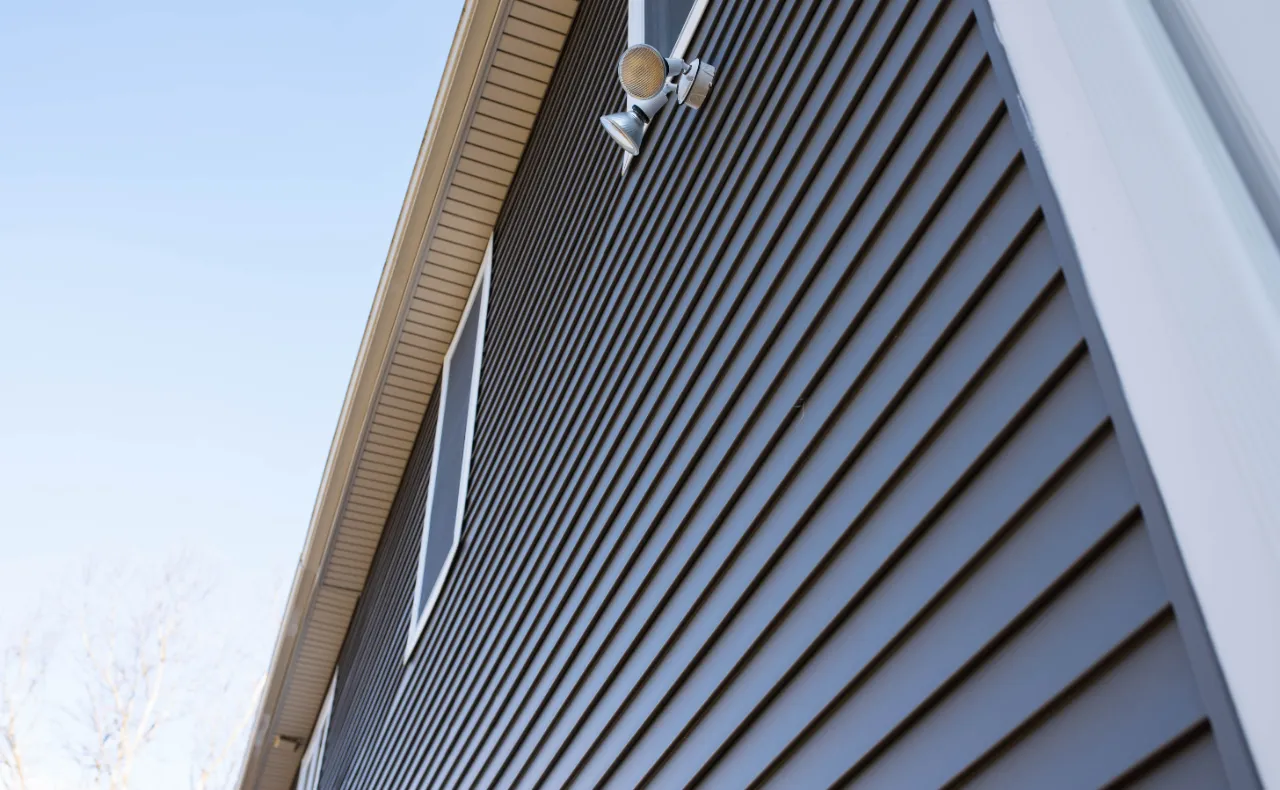
Panels that stay on the wall through nor'easter wind gusts
No more water stains inside after wind-driven rain
Vinyl siding that flexes in freeze and thaw instead of cracking
Tight edges at windows and doors that block winter drafts
Lower courses kept dry above snowbanks and roof splash
Faded or mismatched walls replaced with one even color
Re-siding filed with the town building department when required
Are panels loose, faded or letting water in? A free siding estimate shows what needs repair, what needs replacing and which material fits the building best.
Get Free EstimateReviews from Massachusetts homeowners and property owners who worked with Hendo Construction Inc, straight from Google.
Straight answers about siding work: what a job includes, cost, permits, timing and credentials. Still have a question? Call us.
 Questions? We answer them.
It depends on whether you need a repair or a full replacement. A replacement usually covers tear-off, sheathing repairs, new housewrap, flashing at openings, new channels and the new panels. A repair covers the damaged section plus anything wrong behind it.
We don't publish prices, because no two walls are the same. Cost depends on wall area, the number of stories and the material you pick. Windows, corners and the condition of the sheathing matter too. Your free estimate puts it in writing.
In most towns, yes. Re-siding a house falls under the state building code and needs a building permit. Small ordinary repairs often don't. Rules vary by town, so your local building department has the final word.
It depends on the size of the building and how many stories it has. Weather plays a part, and so does what turns up once the old siding comes off. Ask for a timeline with your estimate, so you know what to expect.
Hendo Construction Inc is licensed, registered and insured. Siding work on owner-occupied homes in Massachusetts generally calls for two credentials. Those are a Construction Supervisor License and a Home Improvement Contractor registration.
Leak repairs, storm repairs and roof replacements on shingle, asphalt, rubber and PVC roofs. Flashing is redone where the roof meets a wall.
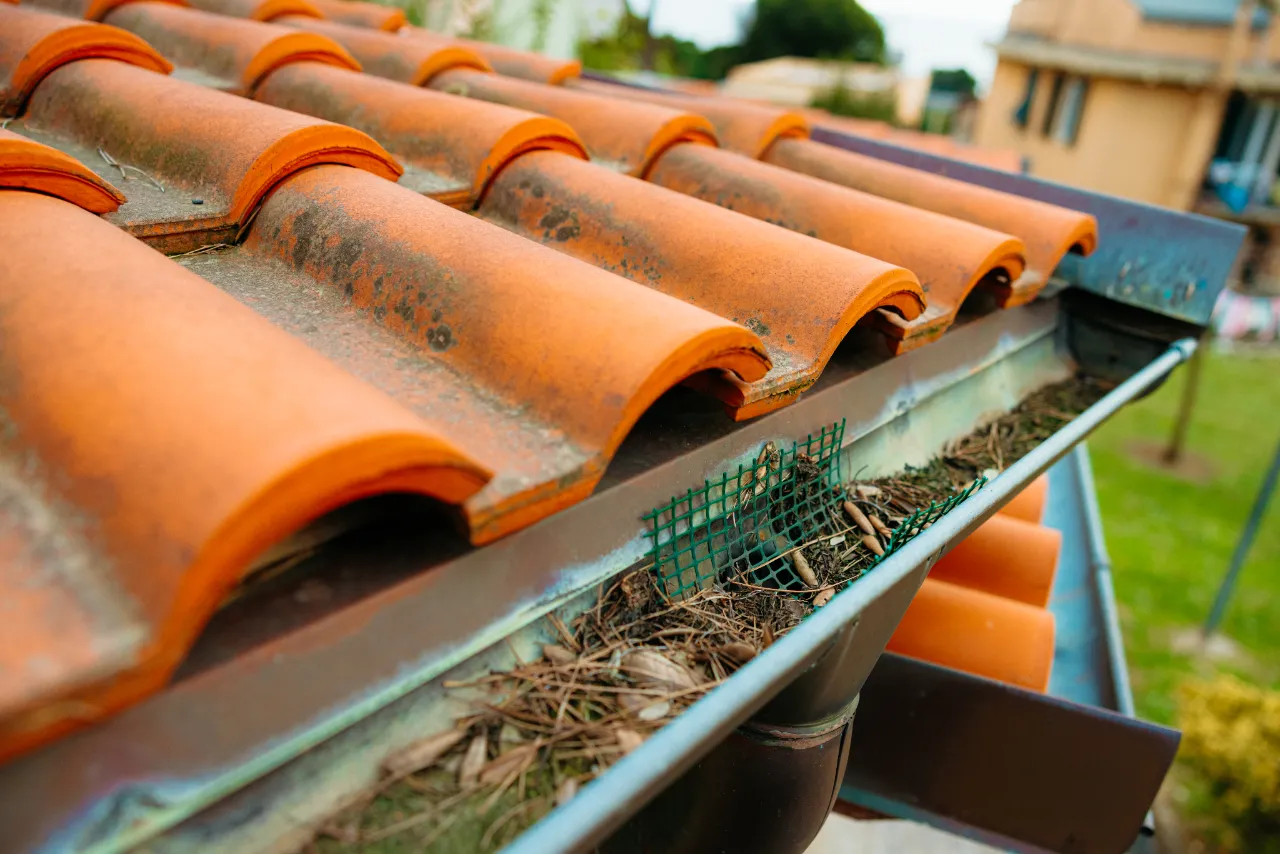
View Roofing ServicesSeamless gutters, guards, cleaning and repairs that carry roof water straight to the downspouts. The water lands away from walls, foundations and walkways.
View Gutter ServicesWindow installation in new openings and replacement of worn units. Each window is flashed and trimmed to seal into the wall around it.
View Window ReplacementOutside corner boards, window and door casings, fascia and rake trim, cut and fitted. Every wall gets clean, finished edges that shed water.
View Trim InstallationInterior, exterior and commercial painting with the prep done first. Scraping, patching and priming help every finish coat bond and hold up longer.
View Painting ServicesEntry, side and rear doors set level and weathertight. New sill pans, adjusted hardware and fresh trim close each opening against winter drafts.
View Door Installation