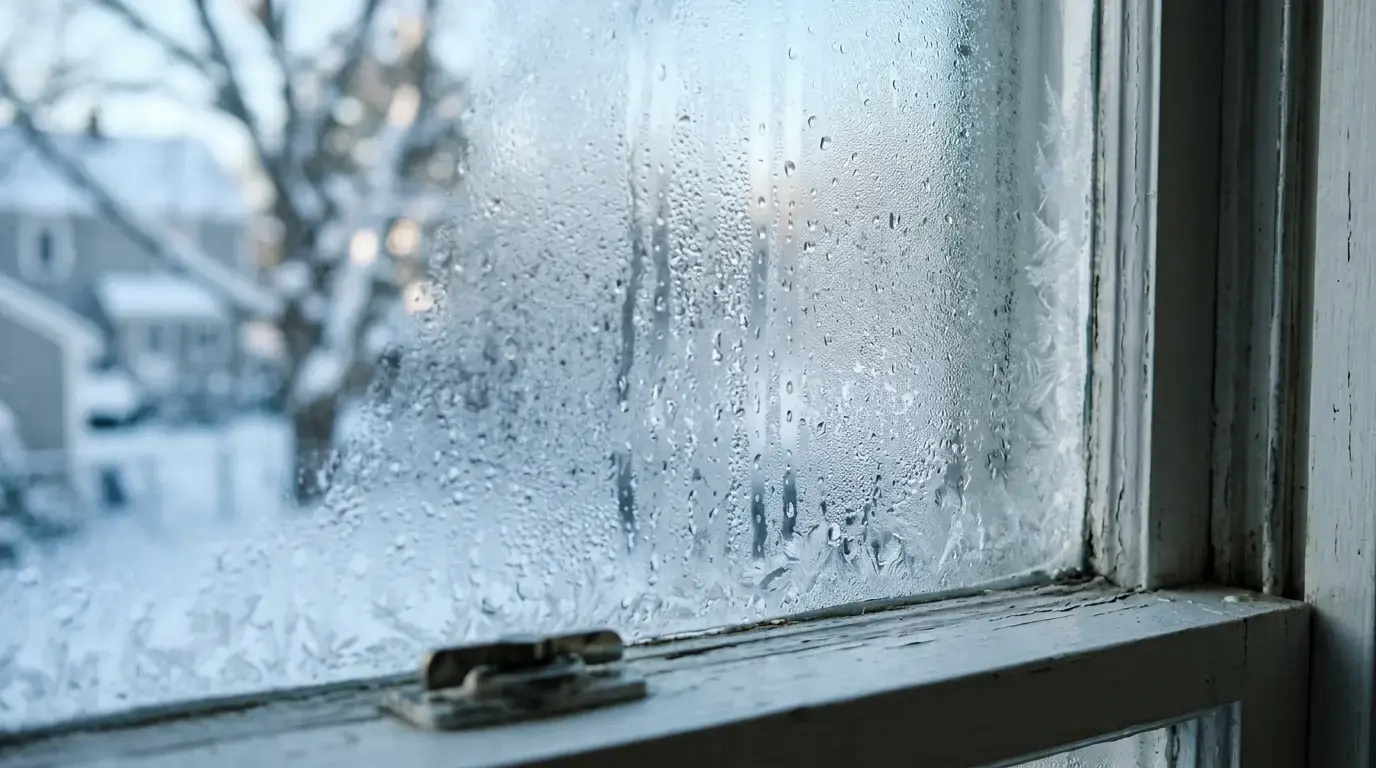
Many homeowners wake up on a cold morning to water running down the inside of the glass. If you've wondered why there is condensation on the inside of windows in Massachusetts homes, you're not alone. It shows up most in the coldest weeks of winter, often in bedrooms, bathrooms and kitchens.
A little moisture on the glass now and then is common. Heavy condensation every day is a different story. Over time, it can stain sills, peel paint and feed mold on window frames and nearby walls. The cause is usually a mix of indoor humidity and a cold window surface. Sometimes the window itself is part of the problem, and sometimes it isn't.
This guide explains where the water comes from and what it says about your windows. It also covers what you can do about it. Some fixes cost nothing more than a change in daily habits. Others call for new windows in the rooms that suffer most.
Warm, Moist Air Meets Cold Glass
Indoor air always holds some water vapor. When that air touches a surface colder than its dew point, the vapor turns back into liquid. In a Massachusetts winter, the coldest surface in most rooms is the window glass. On a frigid night, the inside pane can drop far below room temperature.
Older single-pane and early double-pane windows get coldest. Air near the glass cools, and droplets form. The lower edge of the glass usually fogs first, because cold air sinks and collects there. Window coverings make it worse by trapping cold air against the glass overnight.
That is why condensation often looks heaviest when you open the blinds in the morning. The colder the night and the higher the indoor humidity, the more water you'll see.
Where All That Indoor Moisture Comes From
Everyday living adds a surprising amount of water to indoor air. Showers, cooking, laundry, houseplants and even breathing all release moisture. Humidifiers add more, and they are common in dry winter months. Homes that have been tightened up with new insulation or air sealing hold more of that moisture inside.
That is good for heating, but the humidity has to go somewhere. Bathroom and kitchen fans that vent poorly, or aren't used, let steam spread through the house. Firewood stored indoors and unvented clothes dryers add water too.
When Condensation Points to Failing Windows
Condensation in one place can tell you a lot about the window.
- Water on the room side of the glassMostly humidity and glass temperature
- Fog between two panes of glassThe seal on the insulated glass unit has failed, so it no longer insulates the way it did
Drafts around the sash, ice forming on the inside of the frame and rotting wood sills are also warning signs. Old single-pane windows with storms can trap moisture between the layers. Windows like these run colder, so they collect more water even in a well-ventilated home.
Replacing them with insulated, tightly sealed units raises the inside glass temperature. That alone often cuts condensation sharply in the rooms where it was worst. Learn more about our window replacement in Massachusetts.
Practical Steps Before You Replace Anything
Start by lowering indoor humidity during cold snaps.
- Run bathroom fans during and after showers
- Use the range hood when cooking
- Turn humidifiers down or off when windows start to drip
- Open curtains and blinds during the day
- Keep heating vents clear, especially those under windows
- Wipe up water each morning so it doesn't soak into sills and trim
If these steps fix the problem, your windows are probably fine. If one or two windows still drip, fog between panes or feel drafty, they may be ready for replacement. Hendo Construction checks each window for seal failure, air leaks and damaged sills. Then we tell you which ones truly need attention.