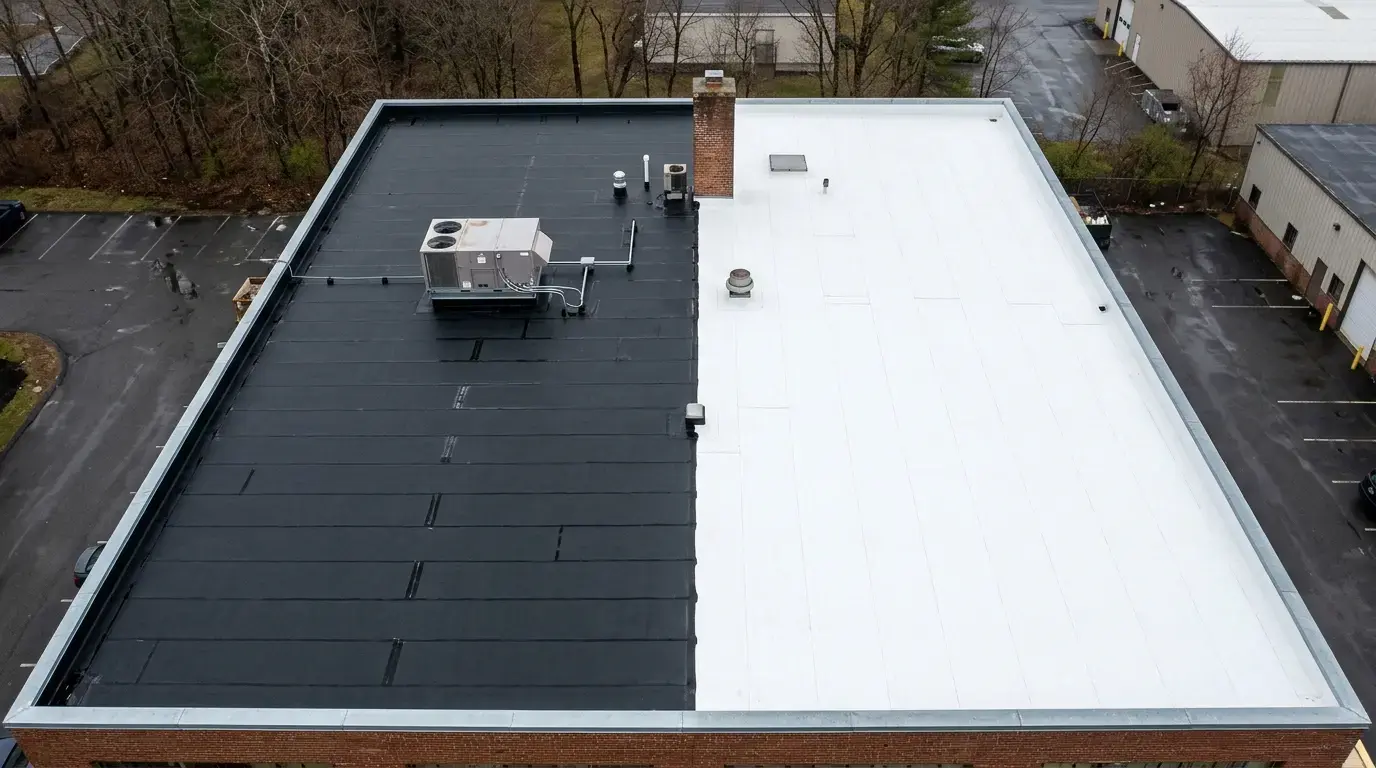
Flat and low-slope roofs are common on Massachusetts porches, additions, garages and commercial buildings. When one needs replacing, the choice often comes down to a rubber or PVC flat roof in Massachusetts. Rubber roofing, usually called EPDM, has been used in New England for decades. PVC is a single-ply membrane that has grown popular on both homes and businesses.
Both can last a long time when installed correctly. They differ in how their seams are joined, how they handle heat and chemicals, and how they look. They also differ in how easy they are to repair later. Snow load, ice and freeze-thaw cycles test every flat roof here.
This guide compares the two so you can decide which fits your building. It also covers where each one shines, from a porch roof at home to a restaurant roof with exhaust fans. The right answer depends less on the brochure and more on how the roof will be used day to day.
How the Seams Are Made
Seams are where most flat roofs fail, so how they're joined matters a lot. EPDM rubber comes in large sheets, which means fewer seams on many roofs. Where sheets meet, the seams are joined with adhesive or seam tape. A well-made EPDM seam holds up for years, but it depends heavily on clean surfaces and careful work. PVC seams are heat welded.
The installer melts the edges of two sheets together, so they become one continuous piece of membrane. When welded correctly, a PVC seam can match the strength of the membrane around it. That makes PVC a good choice on roofs with many penetrations. Vents and rooftop units add seams and flashings that can't be avoided.
Cold Weather, Heat and Sunlight
Massachusetts roofs see deep cold in winter and strong sun in summer. EPDM stays flexible in cold weather, which helps it handle freeze-thaw cycles and building movement. Black EPDM absorbs heat, which can help melt snow but adds heat to the space below in summer. White EPDM is available too. PVC is usually white or light colored and reflects much of the sun's heat.
That can help keep top-floor rooms and commercial spaces cooler. PVC is stiffer in very cold weather, so installers plan the work and handling around temperature. Both materials need proper insulation below them. In many buildings, the insulation board under the membrane matters as much as the membrane itself.
Restaurants, Grease and Rooftop Equipment
The building's use can decide the choice. Restaurants vent grease and cooking oils through rooftop exhaust fans. EPDM rubber can swell and break down when exposed to oils and some chemicals.
PVC resists grease and many chemicals much better, which is why it's common on restaurant roofs. Buildings with rooftop HVAC equipment also see more foot traffic from service technicians. Both materials can be fitted with walkway pads to protect high-traffic paths.
- Porch or garage roof at homeGrease isn't a concern; EPDM's simplicity and track record make it a strong option
- Strip of shops with kitchensPVC is often the safer long-term choice
Repairs, Lifespan and Choosing the Right System
Both systems can be repaired when damaged. EPDM patches are glued or taped in place, and the process is familiar to most roofers. PVC repairs are heat welded, which creates a strong bond but requires the right equipment.
Older PVC can become harder to weld over time, so repairs need a clean, prepared surface. Lifespan depends heavily on installation, drainage and maintenance.
Hendo Construction looks at the building's use, the roof's drainage, the equipment on top and the budget. Then we recommend rubber or PVC based on how the roof will actually be used. Learn more about our flat roofing in Massachusetts.