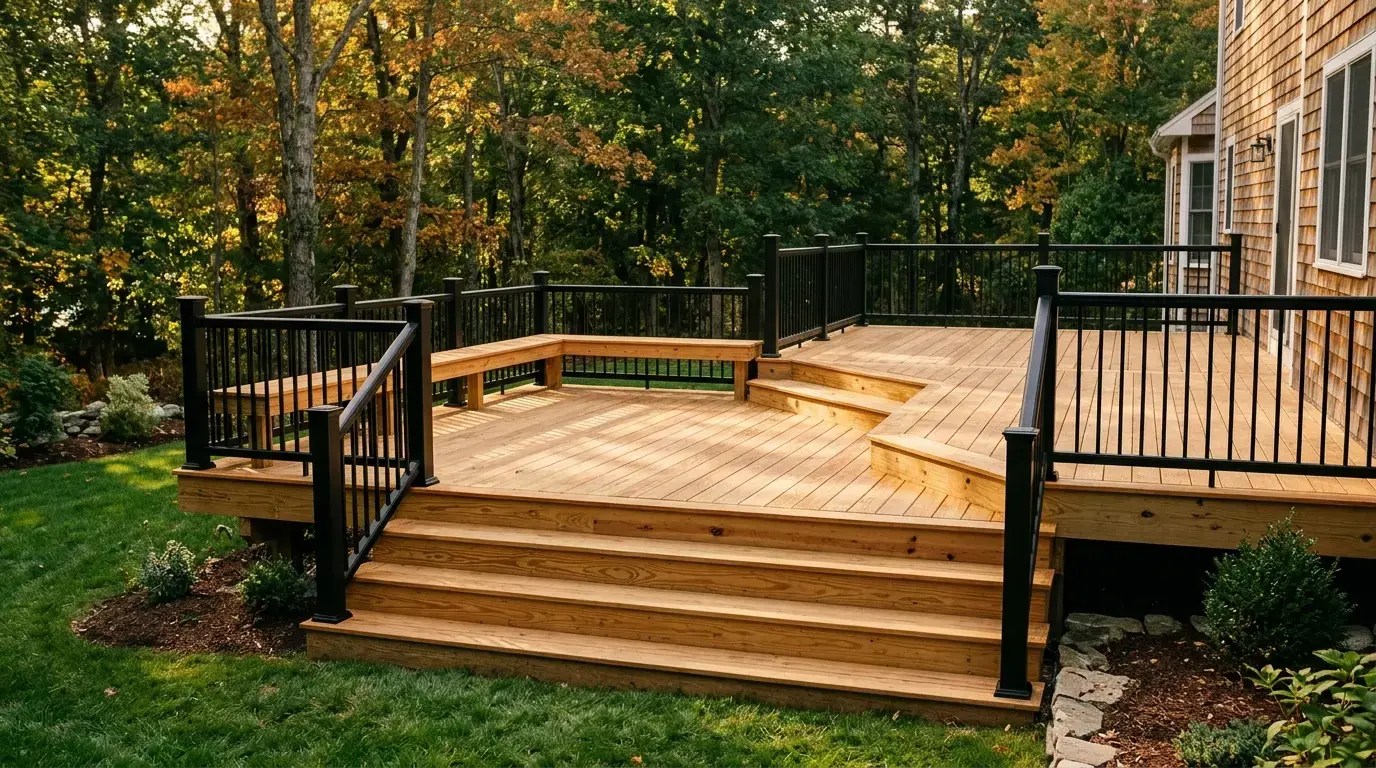
A new deck is one of the most popular outdoor projects in Massachusetts. It's also one of the most varied in scope. Wondering what affects the cost of a new deck in Massachusetts? The answer covers much more than the boards you walk on.
Size and shape matter. So do the railings, the stairs, the ground under the deck and the rules in your town. Two decks with the same footprint can end up very different because of height, slope or materials. Timing plays a role too, since deck season fills up quickly once the weather warms.
Understanding these factors helps you plan a deck that fits your budget and your yard. It also makes estimates easier to compare. Here are the main things that shape the cost of a new deck. None of this requires guessing. A detailed estimate shows exactly where the money goes. Knowing the drivers early also makes it easier to compare bids side by side.
Size, Height and Shape
The footprint of the deck sets the baseline for framing and decking. A larger deck needs more joists, beams, footings and boards. Height matters just as much. A deck close to the ground is simpler to build than one set high off a walkout basement.
Taller decks need longer posts, more bracing, longer stair runs and guardrails at the right height. Shape adds labor too. Angled corners, curves, multiple levels and built-in benches all take more cutting and fitting than a simple rectangle. Wraparound decks need extra framing where sections meet.
Decking, Railings and Stairs
Material choice is one of the biggest factors in a deck project.
- Pressure-treated woodThe traditional option and costs less up front
- Composite and PVC boardsCost more at the start but need far less maintenance over the years
Hidden fasteners, picture-frame borders and inlays add a finished look and more labor. Railings can rival the decking itself in a project. Wood rails are the simplest, while composite, aluminum, cable and glass systems each add cost and style.
Stairs are another major item, especially on tall decks with landings. Lighting on posts and steps adds both safety and expense. Choosing where to spend and where to keep things simple shapes the final number.
Site Conditions, Footings and the House Connection
What's under and around the deck matters. Sloped yards need taller posts and more careful layout. Rocky ground or ledge can make digging footings slower and more involved. Wet areas may call for extra drainage planning.
The connection to the house is another key cost factor. When a deck attaches to the house, the ledger must be fastened and flashed correctly behind the siding. That may involve removing and reinstalling siding along the wall. Old decks also have to be removed and hauled away before a new one goes in.
Access matters as well. A backyard reached only through a narrow gate takes longer to build in than one open to the driveway.
Permits, Reviews and When to Book
New decks in Massachusetts generally need a building permit, and drawings are part of the application. If the yard borders a wetland, the Conservation Commission may weigh in as well. Decks close to property lines may need a zoning check, and sometimes a special permit.
Each review adds time and paperwork to the project. Timing affects the schedule too. Many homeowners call in spring, and the best building months fill up quickly.
Hendo Construction prepares a written estimate that breaks out each part of the deck. That way, you can see what drives the total and adjust before work begins. Learn more about our deck installation and repair in Massachusetts.