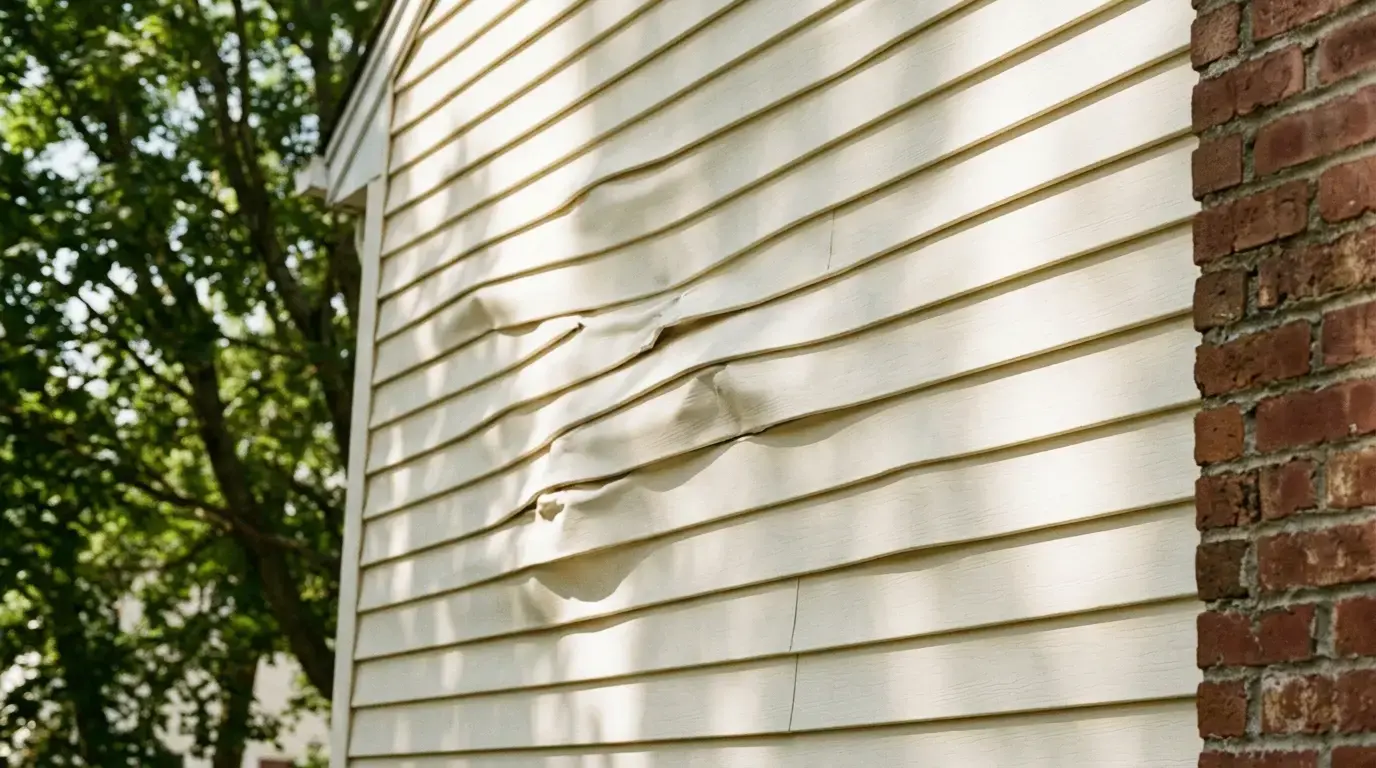
If you're asking why vinyl siding is buckling in Massachusetts, the answer usually starts with movement. Vinyl grows and shrinks with temperature more than wood or fiber cement. A wall goes from hot July sun to January cold snaps every year. That means a lot of movement.
When panels can't slide freely, they bulge, ripple or pull loose. Most buckling isn't a sign of cheap siding. It is a sign that something is stopping the siding from moving the way it was designed to. The cause may be the nailing, the cuts around windows or a heat source hitting one spot. The good news is that many buckled walls can be fixed without residing the whole house.
This guide explains the common causes, how to spot them and what a repair involves. Knowing the cause first saves money on the repair and keeps the problem from coming back next summer.
How Vinyl Siding Moves Through a New England Year
Vinyl is a plastic, and plastics expand when they warm up and contract when they cool down. A long panel can change length noticeably between a summer afternoon and a winter night. Installers allow for that by leaving small gaps at the ends of each panel and inside trim channels. Each panel hangs on nails driven through slotted holes, so it can slide side to side. Massachusetts weather pushes that system hard.
Sunny south and west walls heat up fast, then cool quickly after sunset. Freeze and thaw cycles repeat many times each winter. If the gaps are too small or the panel is pinned in place, it has nowhere to go. The siding then bows outward between nails, and the waves show up most in low morning or evening light.
Nails Driven Too Tight and Other Installation Errors
The most common cause of buckling is nailing. Vinyl siding should hang loosely on its nails, with a little space under each nail head. When nails are driven tight against the panel, it can't slide as it warms. Nails placed at the end of a slot instead of the center cause the same problem.
Short end gaps at corners, windows and doors add to it. So do panels cut too long to fit snugly into J-channel. On a new install, buckling often shows up the first hot week after the job. On an older house, it may follow a repair where someone face-nailed a loose panel.
Reflected Sunlight, Grills and Other Heat Sources
Sometimes buckling appears in one small area while the rest of the wall looks fine. That pattern often points to an outside heat source. Energy-efficient windows on a neighboring house can reflect concentrated sunlight onto vinyl siding. At certain times of day, that reflection can heat a spot enough to soften and distort the panels. A grill parked too close to the wall can do the same thing in one afternoon.
Dark mulch, a black driveway or a dark roof just below the siding adds heat too. Darker siding colors absorb more sun than light ones and move more as a result. Before replacing damaged panels, it helps to find the heat source. Otherwise the new panels can warp in the same spot next summer.
Repair or Replace: What a Siding Check Covers
A siding inspection starts by looking at the pattern of the damage.
- Waves along a whole wallNailing or end gaps
- Distortion in one patchHeat
- Panels pulled out of the lock belowWind or loose fasteners
Hendo Construction removes a few panels to look at the nailing and the condition of the wall behind them. In many cases, the fix is to refasten panels correctly and recut tight ends. Melted or badly distorted panels are replaced with matching pieces where they're still available.
If the original color is discontinued, we look at options such as swapping panels from a hidden wall. A full replacement makes sense when buckling, fading and damage show up on most of the house. Learn more about our siding services in Massachusetts.